Insider's Guide to Costa Rica
Excerpted from my published Insider's Guide for Fora Travel. The full guide covers every region and my complete hotel list; this is the version to read with your coffee.

Costa Rica's reputation for impressive landscapes and wildlife is what brings most people here, but it turns out that reputation is an understatement. Cloud forests dissolve into Pacific surf, volcanoes rise above Caribbean lowlands, and animals show up in combinations that feel improbable. You might spot toucans, tapirs, howler monkeys, and resplendent quetzals, all within a single morning.
The phrase pura vida gets repeated often enough to feel like a cliche, but spend a week here and the philosophy makes a lot more sense. The more you internalize it, the less pressure you'll feel to see everything in one trip.
Kay's three rules for Costa Rica
- First trip? Go in the dry season. December to April buys you reliable sunshine and open roads.
- One region per four days. The country is small; the driving is not. Depth beats a checklist.
- Book transfers, skip the rental. Lodge transfers erase the hardest part of the map, and they're exactly what I arrange.
Need to know
- Airports: two main international gateways, San Jose (SJO) and Liberia (LIR), both with year-round service from major North American hubs.
- Best time to visit: the dry season (December to April) brings reliable sunshine; the green season (May to November) brings fewer tourists and daily rainfall, heaviest in September and October.
- Ideal length of stay: four days gives you a solid getaway, a full week allows meaningful exploration, and ten days lets you cover more ground or simply slow down.
- Getting around: road quality varies and driving after dark is discouraged. Private transfers from your lodge are often the smarter option, and they're exactly the kind of detail I arrange.
- Currency: the Colon (CRC), though U.S. dollars are widely accepted in tourist areas.
Volcano views
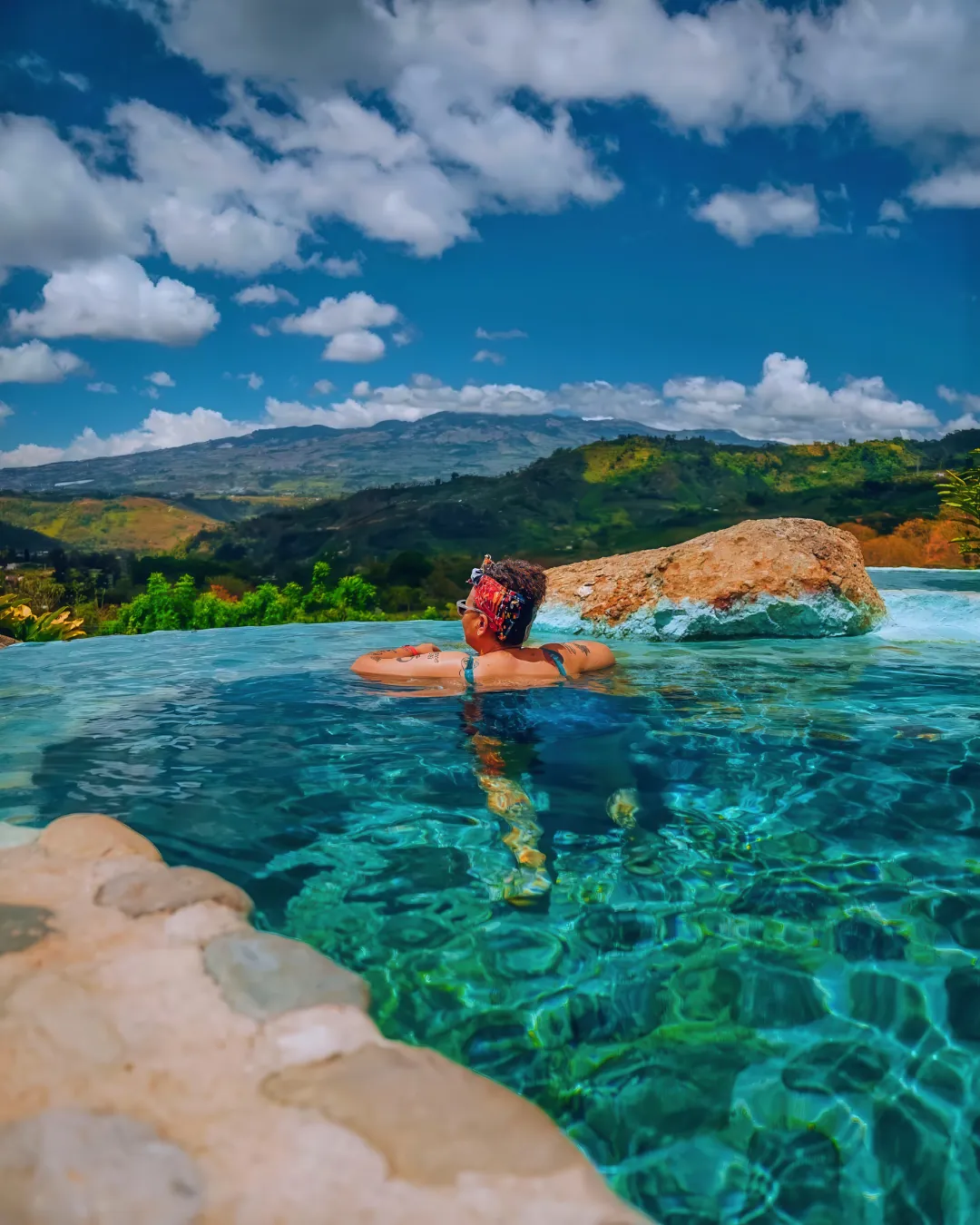
One of Costa Rica's great draws is the Arenal volcano, a near-perfect cone that, on a clear day, dominates the landscape and stops you mid-sentence. Properties in this region are designed to maximize the view at every turn, with infinity pools, open terraces, and hot-spring access oriented toward the peak.
Favorites from my full guide include Nayara Tented Camp, where each guest is assigned a dedicated personal naturalist, and Tabacon Thermal Resort & Spa, built around the region's only natural thermal river. Booking these through me carries Fora partner perks: hotel credits, daily breakfast, upgrades, and extended check-in and check-out whenever possible.
Rainforest and cloud forest
The biggest distinction between hotels in these settings is altitude. Rainforest properties sit at low elevation, where the air is dense, humid, and alive with sound. Cloud-forest lodges sit higher up in the mist, where temperatures drop and the canopy feels closer and quieter. Both offer extraordinary access to biodiversity. Expect open-air architecture, nature guides on staff, and breakfast with the sound of birds.
Beaches
The Peninsula Papagayo is Costa Rica's most polished resort corridor: calm Pacific waters, consistent sunshine, and large-scale luxury resorts, including the Four Seasons Resort Peninsula Papagayo and Nekajui, a Ritz-Carlton Reserve that opened in 2025. This is the destination for travelers who want a beach vacation first, with adventure on standby.